Blog
Insights
How to Use Gong for Sales Coaching: A Complete Guide
Learn how to use Gong for sales coaching with call reviews, scorecards, team insights, and a repeatable workflow that turns feedback into rep improvement.

Moritz Beck
CTO
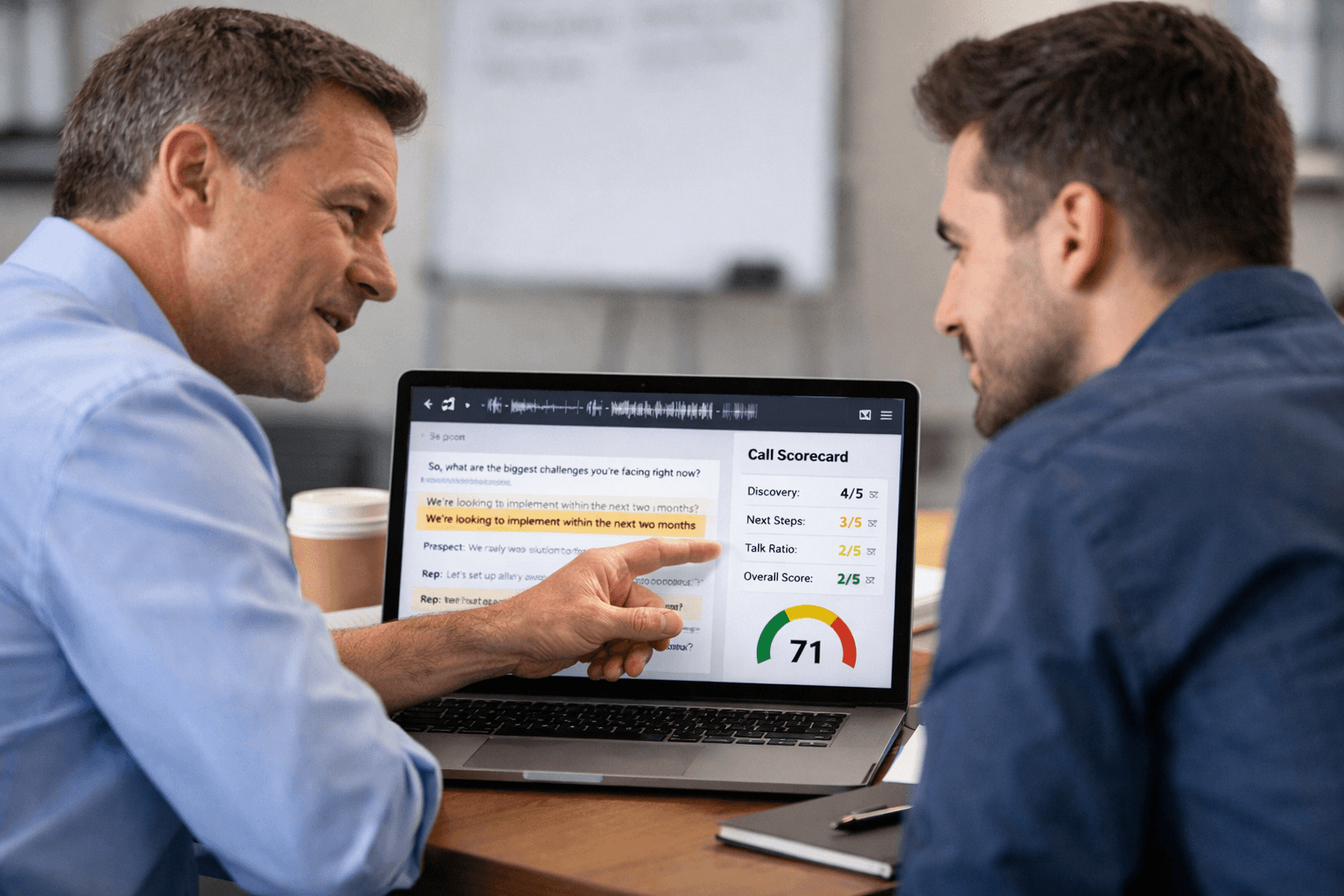
Gong gives sales managers a searchable record of customer conversations, structured scorecards, call-level feedback, and team performance patterns. That makes it a strong foundation for coaching—especially when managers use the data to change one specific rep behavior rather than simply review more calls.
The challenge is operational. Insights only matter when the team turns them into a regular coaching rhythm: choose the right call, identify the skill gap, agree on the next action, practice it, and check whether the behavior improves. This guide shows how to build that loop.
Can Gong be used for sales coaching?
Yes. Gong can support both structured and unstructured coaching. Managers can review recorded conversations, comment on specific moments, score calls against shared criteria, compare patterns across a team, and use examples from strong calls to make expectations concrete.
Gong’s current scorecard workflow can include manager answers, AI-suggested answers, or automatic call review when the relevant features and permissions are enabled. The technology can reduce review effort, but managers still need to decide which behavior matters most and how the rep should improve it.
For current configuration details, see Gong’s official scorecard documentation. Feature availability depends on the organization’s Gong package and permissions.
7 ways to use Gong for sales coaching
1. Review the calls that matter most
Random call review creates random coaching. Start with a business question: why are discovery calls failing to progress, why are proposals stalling, or why is one rep converting more first meetings than the rest of the team?
Use call and deal filters to build a focused sample. Review successful and unsuccessful calls from the same stage or segment, then look for the behavior that separates them. A small, relevant set of calls produces better coaching than a large pile of recordings.
2. Use scorecards to make feedback consistent
A scorecard translates a vague standard such as “run better discovery” into observable criteria. Useful questions might cover agenda setting, problem depth, business impact, stakeholder mapping, objection handling, and next-step clarity.
Keep the first scorecard narrow. Choose one call type and five to eight questions that a manager can answer consistently. Define what each score means, calibrate managers on the same example calls, and review whether the scorecard is producing useful conversations—not merely more data.
3. Turn top-rep behavior into teachable examples
Top performers often do important things that are difficult to describe in a playbook. They frame questions naturally, connect the customer’s words to business impact, and earn clear next steps without sounding scripted.
Use strong call moments as examples. Pair each clip with a short explanation of why it worked and when the behavior applies. The goal is not to make every rep copy the same sentence; it is to make the underlying skill visible and repeatable.
4. Coach the moment, not the whole call
A forty-minute call can contain ten possible coaching topics. Addressing all of them at once overwhelms the rep and gives the manager no clear way to measure improvement.
Choose one moment tied to the current priority. Comment on the evidence, explain the impact, and define a better response. For example: “At 14:20 the buyer mentioned a rollout risk. We moved on without asking who owns implementation. On the next call, ask one follow-up question before presenting the solution.”
5. Use team patterns to prioritize coaching
Individual calls show what happened once. Team-level trends show whether the issue is isolated or systemic. Compare scorecards, call behaviors, stage outcomes, and manager feedback across reps before deciding where coaching time will have the greatest effect.
If the entire team struggles with next-step clarity, solve it through enablement and manager calibration. If one rep is the outlier, use focused individual coaching. This keeps managers from turning every problem into a company-wide training session.
6. Standardize onboarding and sales process adoption
New reps learn faster when they can hear real examples of the team’s messaging and then receive feedback against the same standards used for experienced sellers. Curate examples by call stage, skill, market, and common objection.
During a new methodology rollout, translate the methodology into observable call behavior. Managers can then use the same scorecard language in onboarding, call reviews, one-to-ones, and certification. Consistency matters more than creating a large library that no one revisits.
7. Create a weekly coaching loop
The most effective Gong workflow is predictable. Reps know when calls will be reviewed, what the current focus skill is, and how improvement will be checked. Managers know which evidence to bring into the conversation.
A simple weekly loop is enough: identify one pattern, select one call moment, agree on one behavior, practice it, and review the next relevant calls. Track whether the behavior changes before moving to a new topic.
A practical Gong discovery scorecard example
A discovery scorecard should focus on behaviors the rep can control. A useful starting point might include:
Set a clear agenda and earn agreement to it.
Understand the customer’s current process and problem.
Explore business impact instead of stopping at surface pain.
Identify stakeholders, decision criteria, and timing.
Confirm a concrete next step with an owner and date.
Avoid combining call hygiene, product knowledge, discovery, methodology, and deal strategy in one oversized scorecard. A shorter scorecard is easier to calibrate and more likely to produce coaching that a rep can act on.
How to measure whether Gong coaching is working
Do not judge coaching by the number of comments or scorecards completed. Those are activity measures. Combine them with evidence that the targeted behavior is changing and that the relevant sales outcome is moving in the right direction.
Define the behavior and baseline before coaching begins.
Review the same call type over a consistent period.
Track score or behavior changes for the individual rep.
Connect the behavior to the relevant stage conversion or outcome.
Check whether improvement continues without constant manager reminders.
Where teams still get stuck with Gong coaching
Conversation intelligence can surface the call, the moment, and the score. The remaining gap is often behavior change: who should act today, what exactly should they practice, whether they completed it, and whether the input improved across later conversations.
That gap grows when managers have many reps, multiple call types, and limited time. A dashboard can show several issues at once, while a useful coaching system has to prioritize one next action for each person.
When to add a coaching layer on top of call intelligence
A separate coaching layer becomes valuable when managers have good call data but still struggle to turn it into consistent rep action. Common signs include repeated feedback with no practice, scorecards that do not change behavior, and one-to-ones spent deciding what to coach instead of coaching it.
Zell’s sales coaching software turns call evidence into prioritized manager and rep tasks, focused practice, and visibility into whether the agreed inputs improve. It can complement the conversation data already available to the team rather than forcing managers to start from scratch.
The bottom line
Gong can be a strong coaching foundation when teams use it deliberately: review the right calls, score a small set of observable behaviors, coach one moment at a time, and measure whether the behavior changes. The winning workflow is not “collect more insight.” It is “turn the right insight into the next rep action.”
Moritz Beck
CTO
Share


Now live
Partner program launched
We’re opening a new way for agencies, creators, and operators to grow with us.
Explore the program